.png)
Introduction
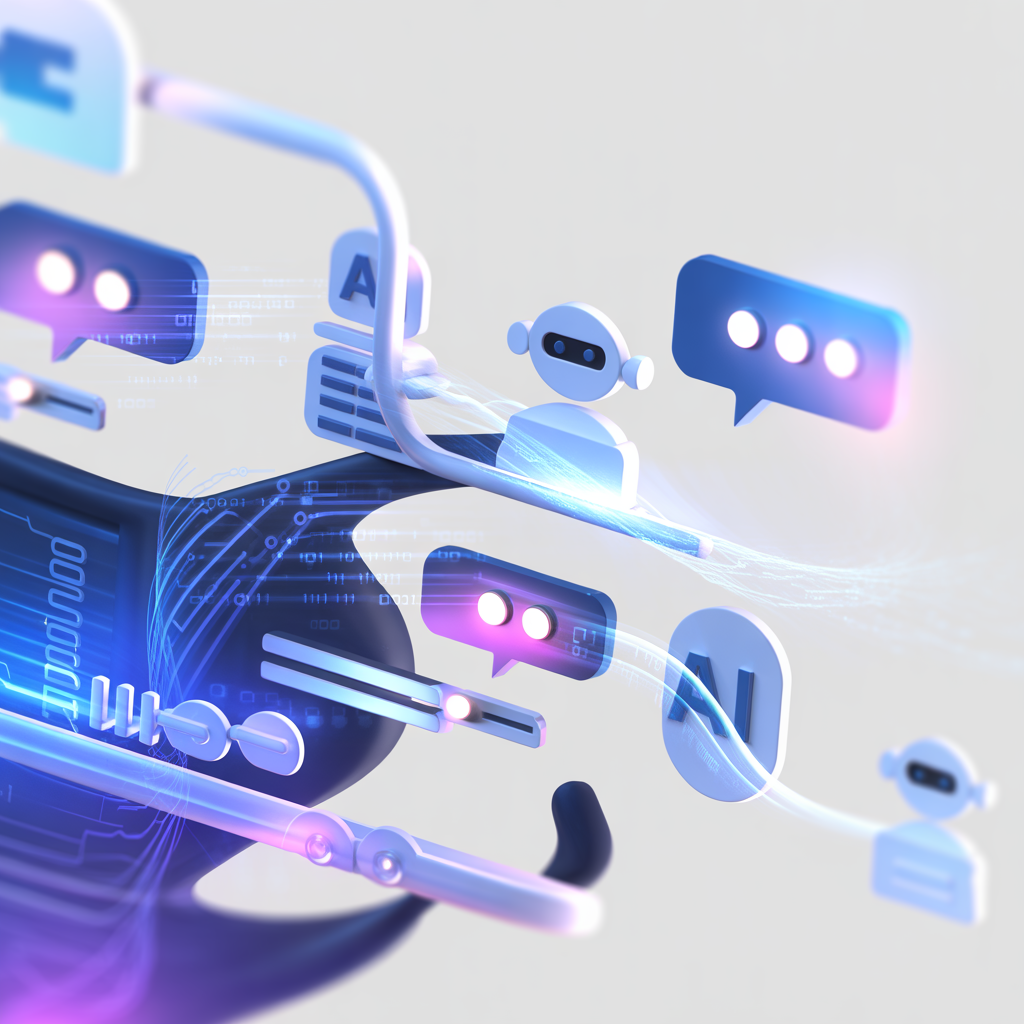
Customer expectations have changed dramatically in recent years. Today’s customers expect instant responses, personalized interactions, and seamless experiences across all digital platforms.
Businesses that fail to meet these expectations risk losing customers to competitors. This is where AI chatbots are making a massive, measurable impact. In 2026, AI-powered chatbots are no longer just clunky support tools—they are highly intelligent systems that enhance the customer experience, drastically reduce operational costs, and drive business growth across all verticals.
What Are AI Chatbots?
AI chatbots are sophisticated software applications powered by advanced artificial intelligence technologies. They are fundamentally different from old, rule-based bots because they utilize:
- Natural Language Processing (NLP): To comprehend nuance, intent, and phrasing just like a human.
- Machine Learning (ML): To adapt and continuously improve over time without manual reprogramming.
- Data Analytics: To pull relevant, personalized data instantaneously from secure databases.
They can understand complex user queries, process vast amounts of information, and respond in a distinctly human-like manner in real time. For companies looking to implement these systems, engaging expert AI Automation Services is crucial to ensuring a smooth launch.
Why AI Chatbots Are Essential in 2026
Modern businesses operate in a fast-paced digital environment where speed and efficiency are strictly tied to revenue. AI chatbots help organizations stay ahead by:
- Providing instant, accurate responses round the clock.
- Handling thousands of queries simultaneously without performance drops.
- Reducing the heavy dependency on overwhelmed human support teams.
- Vastly improving overall customer satisfaction and retention metrics.
Key Benefits of AI Chatbots for Businesses
1. 24/7 Customer Support
AI chatbots operate effortlessly around the clock, ensuring your global customers always receive prompt assistance regardless of restrictive time zones or human holidays.
2. Instant Response Time
Customers no longer need to wait on hold or refresh their email inbox for support agents. Chatbots provide immediate, helpful answers, drastically improving the modern user experience.
3. Cost Reduction
Businesses can significantly reduce skyrocketing operational costs by automating up to 80% of routine, repetitive support tasks, freeing humans to handle high-value escalations.
4. Scalability
Chatbots can comfortably handle thousands of conversations simultaneously, making them the ideal growth tool for fast-scaling businesses facing unpredictable traffic spikes.
5. Personalized Customer Experience
Connected AI chatbots rapidly analyze past user data and browsing behavior to provide highly tailored responses and product recommendations. Integrating these bots tightly into your platform is a staple of high-end Website Development.
6. Increased Lead Generation and Conversion
Chatbots are essentially 24/7 sales representatives. They actively guide users through the sales funnel by:
- Answering specific product questions.
- Recommending related services and upselling.
- Seamlessly collecting user information and qualifying leads.
Real-World Use Cases of AI Chatbots
- Customer Support Automation: Handling detailed FAQs, step-by-step troubleshooting, and basic account queries entirely without human intervention.
- E-commerce Assistance: Helping indecisive customers find products, automatically tracking lost orders, and facilitating seamless checkouts.
- Appointment Booking: Automating complex scheduling matrices for services such as medical consultations, legal meetings, and salon appointments.
- Lead Qualification: Engaging site visitors, collecting vital contact data, and filtering out unqualified leads before securely passing them to the sales teams.
- Feedback Collection: Actively gathering structured customer feedback post-interaction to continuously improve products and services.
Advanced Features of Modern AI Chatbots
In 2026, a chatbot is more than just text input and output. The best systems boast:
- Native multilingual communication with real-time translation.
- Voice-enabled interaction mapping directly to smart speakers and accessibility features.
- Deep API integration with CRMs (Salesforce, HubSpot) and proprietary databases.
- Highly context-aware conversations (remembering what a user said three days ago).
- Emotion detection—an emerging technology that shifts the bot's tone if the user seems frustrated.
AI Chatbots vs Human Support
| Feature | AI Chatbots | Human Support |
|---|---|---|
| Availability | 24/7 (Always On) | Limited / Shift-based |
| Speed | Instant | Slower (Queueing) |
| Cost | Low (Highly Efficient) | High (Labor Intensive) |
| Scalability | High (Unlimited) | Limited |
| Empathy/Nuance | Improving (Emotion AI) | High (Native) |
Challenges of AI Chatbots
- Handling Complex Queries: Extremely nuanced or emotionally sensitive situations still require seamless hand-offs to human intervention.
- Maintaining Human Touch: Severe over-automation can feel clinical or impersonal if conversational design isn't properly calibrated.
- Data Privacy Concerns: Businesses must strictly ensure secure, compliant handling of sensitive customer data inputted into the chat UI.
Best Practices for Implementing AI Chatbots
- Define Clear Objectives: You must understand whether your chatbot is primarily for frontline support, aggressive sales, or an equal mix of both.
- Focus on User Experience: Work with UX writers to ensure conversations feel natural, empathetic, and genuinely helpful.
- Integrate with Existing Systems: A siloed bot is useless. Connect chatbots directly with your CRM, payment gateways, and backend analytics tools.
- Continuously Improve: The launch is just the beginning. Train your chatbot regularly using logs from real, authenticated user interactions.
Future of AI Chatbots Beyond 2026
The next generation of AI chatbots will move further away from "chat" and closer to full operational automation. They will:
- Understand raw human emotions and sarcasm much more accurately.
- Handle vastly complex, multi-layered conversational logic.
- Integrate so deeply with business systems that they can execute multi-step software tasks on a user's behalf.
- Act as full, dedicated virtual assistants rather than just an FAQ retrieval tool.
Ultimately, AI chatbots directly impact your company's lifeblood: customer engagement, hard conversion rates, user retention, and baseline operational efficiency. Businesses actively using properly configured AI chatbots are currently seeing undeniable, measurable improvements in both customer satisfaction and raw revenue.
Conclusion
AI chatbots are permanently transforming the realm of customer support by making it significantly faster, vastly smarter, and infinitely more scalable. In 2026, implementing an intelligent bot is no longer optional—it is a mandatory requirement for businesses that want to stay remotely competitive.
Companies that take the leap to implement robust AI chatbot solutions today will confidently lead in customer experience and operational efficiency tomorrow.

Written By
AJAY SRI RAMM
AJAY SRI RAMM specializes in designing human-centric AI experiences, automating complex enterprise workflows, and building conversational agents that drive real business growth.